
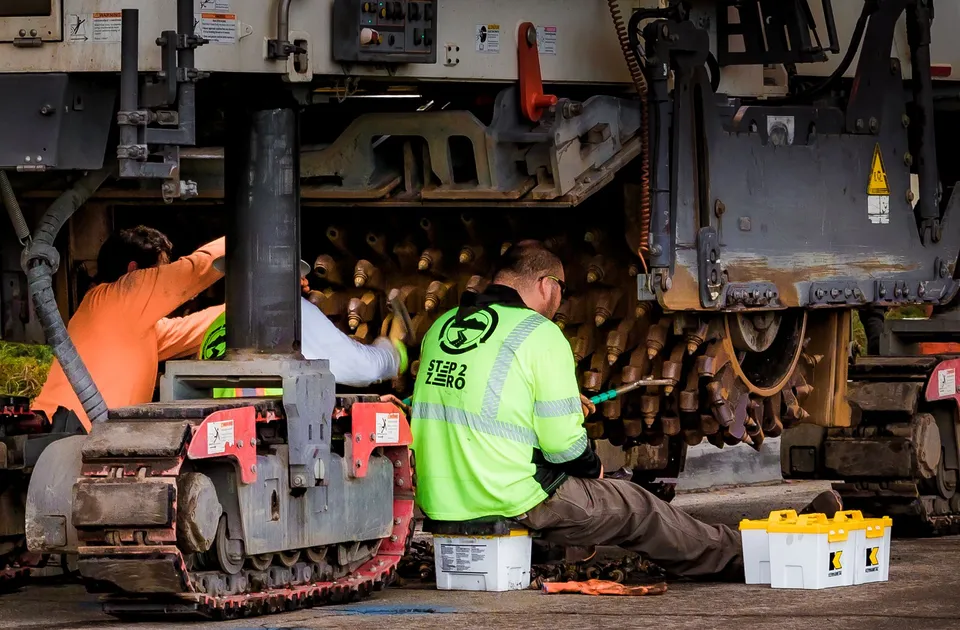
In mining, two people can both be called “experienced” and still be a poor match for the same opening. One may know a haul truck fleet, another a crushing circuit, and a third a maintenance shop full of bearings, drives, and alignment work. That difference is not trivia. BLS treats surface mining and underground mining machine operators as separate occupations, and USGS notes that the 2024 U.S. iron ore system was built around eight open pit mines in Michigan, Minnesota, and Utah that shipped 98% of domestic usable iron ore products, along with associated concentration and pelletizing plants. In other words, the mine, the plant, and the shop are related, but they are not the same workplace.
That is why the strongest mining career path is often the one organized around an equipment family, not just a job title. A person who wants to move ahead in mining should ask, “What kind of system do I know?” rather than only, “What was my title?” The answer might be mobile equipment, fixed processing equipment, electrical and controls, underground production, or contractor maintenance. Each family has its own pace, hazards, handoffs, and training arc. A good fit is less about sounding like a miner and more about being useful in a specific operating environment.
Why equipment family matters
A surface operator spends the day in open terrain, weather, traffic patterns, and larger mobile equipment. An underground operator works inside tighter routes, with different ventilation, egress, and task coordination. Processing workers live one step downstream from extraction and care about flow, quality, instrumentation, and downtime. Maintenance workers may never move rock at all, but they keep the entire operation alive by repairing rotating equipment, electrical systems, structural wear, and control problems. Those distinctions show up in the labor data, in the training path, and in the way mines assign responsibility.
For applicants, that means adjacent experience counts only when you can explain the equipment family behind it. A warehouse forklift operator may be comfortable with mobile machinery, but that does not automatically translate to a mine site. An industrial electrician may know controls and troubleshooting, but mine work still requires site orientation and task-specific authorization. MSHA’s contractor guidance says training depends on the work, the time at the site, and the hazards present, and its rules for underground work require no less than 40 hours of training for new miners without underground experience.
What employers should screen for
A stronger opening question is not “Have you worked in mining?” but “Which equipment family have you worked in, and in what kind of operation?” That lets employers separate pit, plant, shop, and contractor work before the interview gets fuzzy. It also helps with supervision. Mining supervisors do not just manage people; they sequence maintenance windows, contractor access, shift handoffs, and production interruptions. BLS occupational data show first-line supervisors of construction trades and extraction workers as a distinct, higher-wage occupation, which fits the reality that coordination failures can stop a plant faster than a single broken component.
The best screening questions are practical:
- What equipment have you run, repaired, or supported?
- Was your work in a pit, underground, plant, shop, or contractor role?
- What site-specific training did you need before working alone?
- Which tasks were routine for you, and which required supervision?
Those questions are useful because mining hiring is not only about competence; it is about authorization. A worker may be fully capable on paper and still need mine-specific instruction before stepping into a live task. MSHA’s guidance and the 2023 fatality report both underline that training failures are operational risks, not paperwork errors.
Why northern Minnesota makes this especially visible
Northern Minnesota is a compact example of the same pattern. DEED’s Northeast Minnesota profile says the region has 4,097 mining jobs at 35 firms, while its labor force has not fully returned to pre-pandemic levels. DEED also reported that women made up just 8% of the mining workforce in 2022, which matters because a narrow workforce pool affects mentoring, equipment fit, advancement, and retention. In a region like this, employers cannot treat hiring as a simple title match; they need a clear path from training to task to authorization.
The good news is that the pathway structure already exists. Registered apprenticeship combines paid work, classroom learning, and a mentor relationship, and published standards for millwright and electrician pathways commonly call for 8,000 hours of on-the-job learning plus related instruction. Minnesota North College also offers mining-adjacent training in welding, manufacturing technologies, industrial mechanical technology, electrical controls and maintenance, and diesel/heavy equipment. Those routes help workers move into the right equipment family instead of hoping a generic credential will fit every site.
A better way to talk about mining experience
When a resume, interview, or job description gets clearer about equipment family, everyone benefits. Applicants can present relevant experience without overselling it. Employers can place people where they are most likely to succeed. And supervisors can build crews with fewer surprises because the work, the site, and the authorization all line up.
If you are evaluating a mining role or building one, start with the same three questions: What equipment family is this? What kind of site is it? What training is needed before the first independent shift? That one habit can turn a vague mining job into a workable career move. For a conversation about roles in northern Minnesota or elsewhere in the U.S., use the contact page, call 218-WorkNow, or email the office.