
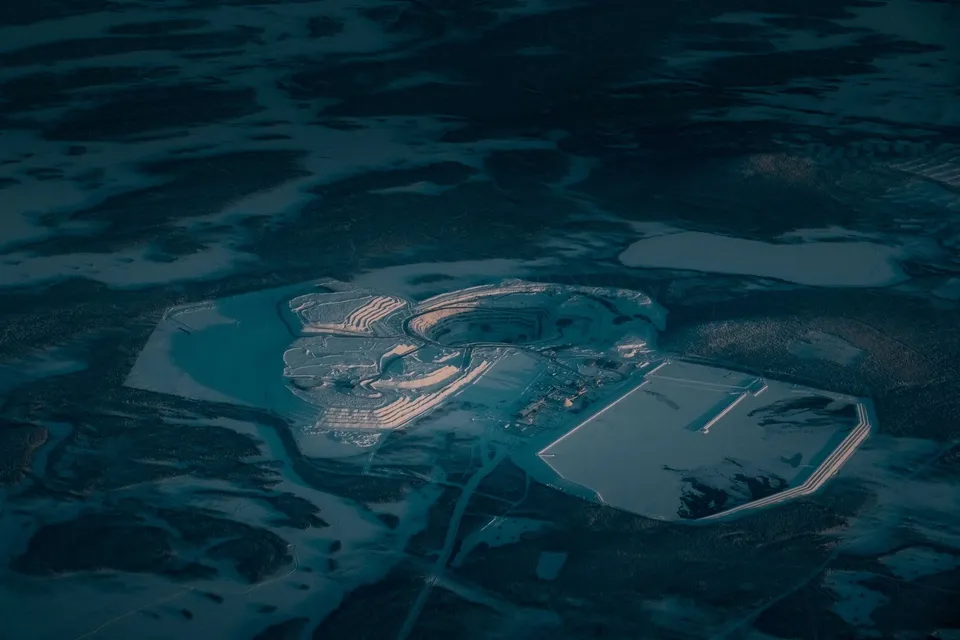
Many mining employers talk about hiring as if the main problem is finding the right resume. In practice, the bigger problem is often what happens after the offer: turning a qualified person into someone who is trained for the exact site, task, and shift they will actually work. That distinction matters because mining is not one labor market. Minnesota’s occupational data separate surface mining operators from underground mining machine operators, while USGS notes that the U.S. iron-ore system still depends on open-pit mines plus associated concentrating and pelletizing plants. In 2024, eight open-pit iron ore mines in Michigan, Minnesota, and Utah shipped 98% of domestic usable iron ore products for consumption in the steel industry. That is not a generic factory pattern; it is a chain of distinct work environments that demand distinct onboarding.
Hire, train, authorize
In mining, those three steps are not the same thing. MSHA’s guidance for surface non-metal mines says Part 46 training depends on the mine’s hazards and the worker’s exposure. For underground mining, the Federal Mine Safety and Health Act requires no less than 40 hours of training for new miners who have no underground experience. Contractors add another layer: MSHA says the training needed by an independent contractor depends on the work being performed, the time on site, and the hazards present, and that the mine operator and contractor share responsibility for training compliance.
That is why a certificate, a CDL, or even years in another industrial setting does not automatically equal mine readiness. A person may know welding, electrical work, heavy equipment, or plant maintenance and still need site-specific orientation before they can be assigned independently. MSHA’s 2023 fatality report is a hard reminder of the risk: it said a contractor did not ensure proper task training for a telehandler operator, and the worker had no mining experience. The lesson is not that every new hire is the same; the lesson is that in mining, the handoff from trained to authorized has to be deliberate and documented.
What good onboarding actually covers
Strong mining onboarding is less like a welcome packet and more like a production control system. It needs to answer practical questions: Which site is this person entering? Which task is this person approved to do? Which equipment, shift, and hazard set applies? Who signs off when the worker can operate without direct shadowing?
For employers, the most useful onboarding map is usually built around role families rather than job titles alone. A pit operator, a plant operator, a millwright, an electrician, and a controls technician all support production, but they do not learn the same things in the same order. Minnesota North College’s pathway stack reflects that reality. Its programs include Welding, Manufacturing Technologies, Industrial Mechanical Technology, Electrical Controls & Maintenance, Electrical Maintenance & Construction, Diesel Mechanics & Heavy Equipment, Engineering, and Natural Resource Technology. The college also says its Manufacturing Technologies diploma is a 43-credit, one-year program that includes machining, welding, fabrication, assembly, CAD/CAM, internships, and explicit preparation for mining maintenance and construction maintenance.
That kind of pathway matters because mining maintenance is a long-game occupation. Apprenticeship.gov describes registered apprenticeship as paid work paired with classroom instruction and mentorship, and published standards show the scale of the commitment: millwright and electrician programs commonly require about 8,000 hours of on-the-job learning plus related instruction. In other words, the best onboarding programs do not pretend that a new mechanic or electrician is immediately ready for every mine task. They recognize that the worker needs structured progression before they are trusted to handle high-stakes equipment independently.
Why this matters even more in northern Minnesota
Northern Minnesota makes the onboarding question more urgent because the labor market is spread out and the work is concentrated. DEED’s regional data say Northeast Minnesota includes Aitkin, Carlton, Cook, Itasca, Koochiching, Lake, and St. Louis counties, and that mining in the region accounted for 4,097 jobs at 35 firms. DEED also reported that the region’s labor force was still below its 2019 level, and that mining lost 277 jobs in 2025. Those are not abstract numbers. They mean a mine or plant cannot assume the local workforce will refill itself quickly after turnover, a shutdown, or a retirement wave.
Distance shapes onboarding too. DEED’s commuting data show that workers are often traveling well beyond a single town for these jobs: the agency noted Duluth as the home residence of 120 workers with jobs in Hibbing, and St. Louis County commuting data show 78,483 workers drove alone and 10,370 carpooled. That is a reminder that the first weeks on the job are not only about learning the site. They are also about whether the schedule, commute, and weather pattern fit the worker’s real life. In a region like the Iron Range, a role that looks manageable on paper may fail in practice if the drive, shift rotation, or housing situation is unrealistic.
Questions applicants should ask before day one
If you are the applicant, the best onboarding question is not “Will I get training?” It is “What exactly do I need to be authorized to do at this site, and how will that be documented?” Ask whether the role is direct hire or contractor-based. Ask who signs off on task training. Ask whether the job is pit, plant, shop, or mobile maintenance work. Ask how long the onboarding period lasts before you are expected to work with full independence. Those questions are not about skepticism; they are about avoiding the common mistake of assuming that similar experience equals site-specific readiness.
Employers should ask a matching set of questions. Which tasks can be taught in-house? Which ones require a community-college pathway, apprenticeship, or outside credential? Which workers can be cross-trained, and where does cross-training stop because the site requires specific authorization? The answers shape scheduling, coverage, and retention as much as they shape safety. Mining crews do not just need more people. They need the right people, trained in the right sequence, for the right place.
When onboarding is done well, it reduces turnover, prevents bad assumptions, and gets a new hire into real production sooner. More important, it gives both sides a clear picture of what the job actually is. If you are planning a mining role in northern Minnesota, or trying to decide whether a candidate is ready for one, start with the site, the task, and the authorization—not just the title.
To talk through a role, schedule, or location, use ironminingtalent.com/contact.html, call 218-WorkNow, or email grandrapidsmn@expresspros.com.